|
Getting your Trinity Audio player ready...
|
Making wise choices is essential when starting a new business, particularly when selecting the best mobile platform for your first product. Android app development for startups is particularly appealing to many founders due to its wide global reach, unparalleled flexibility, and affordable development options. Android, the most popular mobile operating system in the world, allows startups to expand rapidly, test product concepts more quickly, and connect with billions of users on various devices.
We at Debut Infotech are aware of how important mobile technology is to startups. For this reason, we assist founders in utilizing Android’s flexible app architecture, robust tools, and open ecosystem to create durable digital solutions. This article explains how startups can accelerate growth through strategic mobile execution and examines the full benefits of Android development, libraries, and frameworks.
Build Your High-Growth Android App With Experts
Ready to turn your startup idea into a scalable Android product? Our experienced Android developers help you design, build, and launch high-performance apps built for growth.
Why Android Is the Preferred Platform for Startup Innovation
Android dominates global smartphone usage, making it an ideal choice for startups targeting large, diverse markets. Its open-source foundation enables new businesses to customize applications, integrate emerging technologies, and build cost-effective solutions without licensing restrictions.
Android also allows startups to experiment with multiple app formats, device categories, and market segments—something that closed ecosystems cannot match. Whether the goal is a Business app for startups, an enterprise-grade application, or cross-device Android apps for wearables and tablets, the platform offers full flexibility.
- Wide Market Reach and Global Accessibility
One of the most substantial advantages of Android development is its massive user base. Startups building Android business applications gain immediate exposure to billions of potential customers across Asia, Africa, Europe, and Latin America.
Why this matters for startups:
- It becomes easier to validate ideas due to larger sample sizes.
- Founders can target emerging markets where Android holds nearly complete dominance.
- Global distribution via Google Play accelerates early traction.
Android’s accessibility ensures that even budget-conscious users across developing nations can access your product—expanding revenue potential and supporting future scalability.
- Cost Efficiency and Faster Time-to-Market
Startups must manage budgets carefully, and Android App development cost plays a crucial role in selecting a platform. Because Android’s ecosystem is open-source, licensing fees are eliminated, and development tools are free to use.
Cost benefits include:
- Availability of open-source Android App Libraries
- Lower hardware requirements for development
- Faster prototyping with well-structured Android app architecture
- Access to large talent pools when you hire Android developers
This affordability reduces financial pressure while enabling rapid innovation—helping founders release their first MVP within a short mobile app development timeline.
- High Customizability for Unique Startup Ideas
Not all new ventures follow traditional business models. Some require unconventional application logic, advanced integrations, or unique user experiences. Android’s customizable architecture supports this through:
- Native access to device hardware
- Flexible UI components
- Support for multiple mobile app development frameworks
- Deep customization for industry-specific workflows
Startups working on niche concepts, enterprise Android apps, or disruptive Mobile business solutions benefit immensely from this adaptability.
- Seamless Integration With the Google Ecosystem
Every Android device connects effortlessly with Google’s robust suite of services. This creates opportunities for startups to build highly integrated experiences around:
- Google Maps
- Firebase
- Google Cloud
- Google Analytics
- AI-powered features
These integrations support everything from geolocation tracking to scalable backend architecture—reducing infrastructure complexity and development overhead.
- Multi-Device Compatibility and Cross-Device Expansion
Android’s open environment powers more than just smartphones. Startups can extend their product presence across:
- Tablets
- Smart TVs
- Wearables
- Automotive systems
- IoT devices
This cross-device adaptability lets founders design cross-device Android apps that resonate across multiple user segments—reinforcing brand visibility and boosting monetization opportunities.
The Power of Android App Architecture
A strong Android app architecture helps startups build scalable, maintainable products. The most widely used patterns include:
- MVVM (Model–View–ViewModel)
- MVI (Model–View–Intent)
- Clean Architecture
These structures ensure clean code, easier feature updates, and long-term sustainability—key factors for startup success.
Reduced Mobile App Development Cost Through Android App Bundles
Android App Bundles allow developers to publish optimized application packages, reducing file size and improving performance. This leads to:
- Faster installation rates
- Better user retention
- Lower bandwidth consumption
- More efficient app store distribution
For startups, this means a smoother onboarding experience and higher conversion rates during early market entry.
Access to a Vast Pool of Android Developers
Android has one of the world’s largest developer communities. Startups can easily hire Android developers with expertise across:
- Kotlin
- Java
- Jetpack libraries
- Advanced UI frameworks
- Backend integrations
This abundance of talent makes Android development more affordable, flexible, and scalable compared to highly specialized ecosystems.
Startup Use Cases: How Android Apps Solve Real Business Challenges
Android’s unmatched flexibility and global reach make it a robust foundation for solving real-world startup challenges. Whether a company is validating its first MVP or scaling to millions of users, Android app development provides founders with the tools to build efficient, high-performing digital solutions that directly address market needs. With the right architecture, integrations, and product strategy, startups can quickly move from idea to impact.
Popular Startup Use Cases Include:
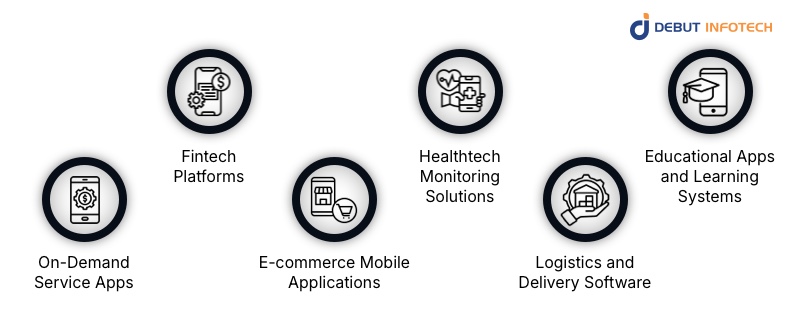
1. On-Demand Service Apps: From ride-hailing to home services, Android apps allow startups to connect service providers with customers instantly. Real-time tracking, in-app payments, and automated scheduling streamline operations and drive revenue.
2. Fintech Platforms: Startups use Android to build secure wallets, payment gateways, investment tools, lending apps, and digital banking interfaces. Enterprise Android apps support high-level encryption and compliance, making fintech innovation faster and safer.
3. E-commerce Mobile Applications: Android’s broad device coverage helps startups reach mass-market shoppers. Features like push notifications, personalized recommendations, and seamless checkout improve conversions and customer retention.
4. Healthtech Monitoring Solutions: Android-powered health apps support telemedicine, patient monitoring, fitness tracking, and medical record management. Cross-device Android apps integrate with wearables and IoT devices to deliver real-time data insights.
5. Logistics and Delivery Software: Startups rely on Android to develop routing engines, driver apps, dispatch dashboards, and order-tracking systems. These tools reduce operational inefficiencies and enhance transparency across supply chains.
6. Educational Apps and Learning Systems: Edtech startups build interactive learning platforms, test-prep apps, and classroom management tools. Android enables multimedia content delivery and offline capabilities for accessibility.
Each use case highlights Android’s value as a mobile business solution—scalable, customizable, and adaptable across industries. When combined with custom Android app development and enterprise-level integrations, the platform empowers startups to innovate faster and compete effectively in dynamic markets.
Overcoming Android App Development Challenges
Despite its many advantages, startups must navigate specific challenges when designing Android apps.
Common obstacles include:
- Device Fragmentation: Android runs on thousands of devices with varying screen sizes, resolutions, chipsets, and OS versions. This makes consistent performance and UI behavior challenging because the app must adapt to a wide range of hardware environments.
- Security Vulnerabilities: Because Android is open source, it’s more exposed to malware and unauthorized access attempts. Startups must implement strong encryption, secure APIs, and regular updates to protect user data and meet industry-level security expectations.
- Performance Optimization: Low-end devices with limited RAM or processing power can struggle with poorly optimized apps. Ensuring fast loading, efficient background processes, and a lightweight architecture is necessary to deliver a smooth user experience across all device tiers.
- Testing Across Hardware Variations: Unlike iOS, where only a few device types exist, Android apps must be tested on dozens—sometimes hundreds—of devices. This increases QA time and complexity, making automated testing and device labs extremely important.
This is why partnering with an experienced Android development company like Debut Infotech is essential. We help founders navigate complexity, streamline performance, and deliver stable, scalable apps.
How to Build a Startup App the Right Way
Building a successful startup app requires more than just coding — it demands strategy, planning, execution, and continuous improvement. When we guide founders through the development journey, we focus on clarity, efficiency, and scalability to ensure the product is built for long-term success. The steps below outline the core stages every startup should follow.
Essential Steps to Build a Startup App
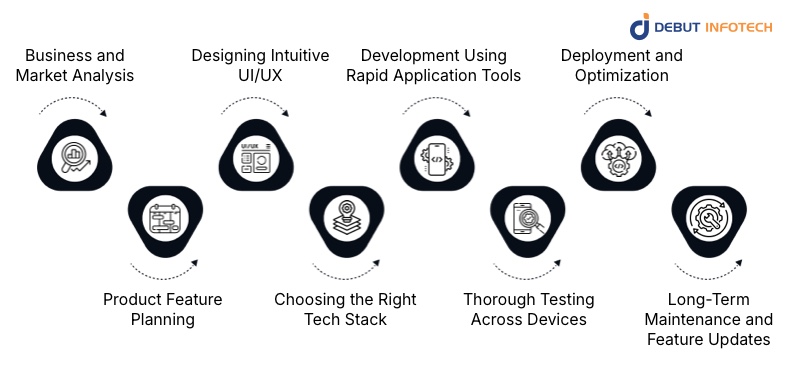
1. Business and Market Analysis: Founders must validate their idea by researching competitors, identifying user pain points, and confirming demand. This ensures you build a solution customers actually need.
2. Product Feature Planning: Prioritize features based on user value and development feasibility. Defining a clear MVP (Minimum Viable Product) prevents overspending and keeps the launch timeline controlled.
3. Designing Intuitive UI/UX: A startup app must offer seamless experiences. Wireframes, prototypes, and usability testing help shape an interface that feels simple, modern, and user-focused.
4. Choosing the Right Tech Stack: Selecting scalable technologies ensures long-term stability. This includes choosing the right mobile app development frameworks, backend architecture, APIs, and complementary tools.
5. Development Using Rapid Application Tools: Rapid web application development tools shorten timelines and help teams deliver faster without compromising quality. Agile sprints allow continuous iteration and improvement.
6. Thorough Testing Across Devices: Testing across multiple Android devices ensures that layout, performance, and interactions work smoothly on different screen sizes and hardware types.
7. Deployment and Optimization: Once launched on the Play Store, the app requires performance monitoring, crash analytics, and ongoing optimization based on user feedback.
8. Long-Term Maintenance and Feature Updates: Every successful startup app evolves. Continuous improvements, security patches, and scalability enhancements are essential for staying competitive.
At Debut Infotech, we help startups navigate each stage with structured planning, cost-efficient execution, and an engineering roadmap aligned with their long-term growth.
Android vs. iOS — Which Is Better for Startups?
| Criteria | Android | iOS |
| Market Reach | Larger global audience | Strong in premium markets |
| Development Cost | Generally lower | Higher due to hardware + tools |
| Customization | Extremely flexible | More restricted |
| Device Diversity | High | Low |
| Talent Availability | Broad global ecosystem | Smaller pool, higher rates |
| MVP Speed | Faster | Moderate |
| Ideal For | Startups targeting broad or emerging markets | Startups targeting premium niches |
Android clearly provides a more accessible foundation for early-stage businesses seeking fast traction and broad user adoption.
Future Trends in Android App Development Every Startup Should Prepare For
Startups must adapt to evolving technology to remain competitive, particularly within the rapidly expanding Android ecosystem. Founders who grasp the platform’s direction can make informed product choices, lower long-term development costs, and enhance scalability. These trends underscore Android’s dominance as the favored platform for innovative startup applications.
1. Rise of AI-Powered Android Apps
Artificial Intelligence is no longer optional — it is now a core part of modern Android business applications. Startups increasingly rely on AI-powered features such as automated customer support, recommendation engines, behavioral analytics, voice assistants, document processing, and predictive personalization.
Because Android integrates seamlessly with popular AI frameworks, it gives startups a competitive advantage. Debut Infotech helps founders build intelligent applications that learn user behavior, improve engagement, and increase conversion rates over time.
2. Multi-Platform Support Through Kotlin Multiplatform
Kotlin Multiplatform is quickly becoming a game-changer for startups looking to speed up development and reduce mobile app development timeline challenges. By sharing business logic across Android, iOS, Web, and Desktop, startups can significantly reduce redundant work and accelerate MVP development.
This approach is ideal for teams with limited budgets but ambitious scalability plans. Since Google officially supports Kotlin, it also integrates smoothly into modern Android app architectures.
3. Blockchain-Integrated Android Applications
More startups are adopting blockchain for transparency, automation, and security. Whether it’s a fintech wallet, supply chain tracker, identity management tool, or tokenized asset platform, blockchain-enabled Android apps are becoming increasingly common.
Debut Infotech — known for enterprise blockchain development — supports founders in integrating smart contracts, decentralized storage, tokenization features, and secure authentication workflows directly into Android apps.
4. IoT-Connected Android Systems
From smart home solutions to healthcare monitoring devices, IoT is expanding rapidly. Android’s flexibility makes it the leading platform for startups to build IoT-powered business apps.
This includes:
- Remote tracking and automation
- Real-time data visualization
- Sensor-driven decision-making
- Predictive maintenance and alerts
Combined with custom Android app development, these capabilities empower founders to enter fast-growing markets with strong product differentiation.
5. Voice-Enabled Android Applications
The adoption of voice commerce and voice assistants continues to grow. Startups use voice technology to offer hands-free interactions, improve accessibility, and increase task efficiency. Integrating speech recognition, natural language processing, and conversational AI into Android apps enhances the user experience across industries such as retail, automotive, fintech, and healthcare.
6. Sustainable and Energy-Efficient App Design
Consumers increasingly value apps that are optimized for battery efficiency. Android’s evolving guidelines encourage developers to build lightweight, energy-conscious applications — a priority for startups that rely on high retention rates and long user engagement cycles.
Startups that embrace these trends now will be better positioned to scale, attract investors, and stay competitive in the global marketplace. Debut Infotech continues to guide founders through these innovations, helping them build future-ready, high-performing Android apps tailored for rapid growth.
Why Choose Debut Infotech for Android App Development?
Debut Infotech stands among the leading Android app development companies, offering complete product development support—from ideation to launch.
We specialize in:
- Enterprise software development
- Advanced mobile app development services
- Custom Android app development strategies
- Cross-platform architecture
- API integration and cloud engineering
- Performance optimization
Our engineers build resilient, user-friendly products with long-term scalability in mind.
Have an idea but unsure how to turn it into a scalable Android app?
Our startup-first approach helps founders validate ideas, build MVPs faster, and scale confidently with the right architecture and tech stack.
Conclusion
Android gives startups an edge by offering affordability, a broad reach, and incredible versatility. With an open-source ecosystem, a large developer community, and a customizable architecture, the best Android app development for startups enables founders to innovate quickly, validate ideas efficiently, and scale confidently.
At Debut Infotech, we help startups transform their business models into powerful, revenue-generating Android applications. Whether you’re building your first MVP, redesigning an existing app, or launching enterprise Android apps, our team ensures every product is engineered for growth, performance, and long-term success.
Android is not just a platform—it’s a launchpad for startup innovation. And with the right development partner, your idea can become the next industry-shaping mobile solution.
Frequently Asked Questions
A. Android offers a larger global user base, lower development barriers, more device flexibility, and cost-efficient deployment. This makes it ideal for startups aiming for rapid market penetration and diverse audience reach.
A. The Android App Development Cost varies depending on complexity, features, integrations, UI/UX depth, and backend architecture. Simple apps cost less, while feature-rich or enterprise-grade apps require greater investment.
A. The mobile app development timeline can range from 8 to 20+ weeks, depending on:
– App complexity
– API integrations
– Custom features
– Android app architecture
– Testing and optimization needs
Startups can shorten this timeline by hiring experienced Android developers.
A. Common challenges include device fragmentation, OS version variations, performance optimization, and security hardening. Working with an experienced Android development company helps overcome these issues.
A. Yes. Custom Android app development is designed to be scalable. Startups can start with an MVP and expand features, integrate third-party services, switch cloud providers, and optimize architecture as the business grows.
A. Essential features include onboarding, authentication, core business functionality, notifications, analytics, and strong UI/UX. The feature set should align with How to build a startup app and follow strategic MVP planning.
A. Android App Bundles reduce app size and improve installation performance. Smaller apps convert better, load faster, and work smoothly on low-spec devices — all crucial for Android business applications targeting diverse markets.


