
|
Getting your Trinity Audio player ready...
|
Silver tokenization is quickly becoming one of the most talked about shifts in the precious metals world and it’s easy to see why. Instead of dealing with bulky bars, storage worries, or high entry costs, you can now own digital tokens that represent real, securely vaulted silver. It’s basically taking a classic asset and giving it a modern, digital twist.
And people are already jumping in. The total market value of tokenized silver recently crossed $200 million, showing how fast this idea is catching on with everyday investors and institutions alike.
What makes it so appealing is how simple it becomes to buy, sell, and trade silver even in tiny fractions without any of the old-school hassle. If you’ve ever wanted an easier, more flexible way to invest in silver, silver tokenization might be exactly what you’ve been waiting for.
Silver Tokenization Explained
Before diving into how to invest in tokenized silver, it helps to get clear on what silver tokenization actually is, both in simple terms and on the technical side.
So, what does it really mean? At its simplest, silver tokenization takes real, physical silver and turns its ownership into digital tokens on a blockchain. Instead of buying a heavy bar or a stack of coins, you hold a digital token that represents a specific amount of silver, maybe an ounce, maybe a gram. It’s the same asset, just in a format that’s way easier to manage.
On a technical level, each of these tokens is backed 1:1 by actual silver stored in a secure vault. It implies that you do not have a pure digital asset; you are in possession of a digital image of the real-world commodity. Consider it as a kind of digital certificate of ownership, but with as much transparency and security as the blockchain technology presents to the table.
Why does this matter? Because it’s helping bridge the gap between traditional precious metals and the growing real world asset (RWA) movement. Tokenization makes silver more accessible, more liquid, and far easier to trade. You can buy tiny fractions instead of full bars, move tokens instantly, and skip the usual storage headaches, all of which opens the door for more everyday investors to participate.
In short, silver tokenization is taking an old-school asset and giving it a modern upgrade, making silver investing simpler, smoother, and more inclusive than ever.
Unlock Silver’s Digital Potential with Asset Tokenization.
Transform physical silver into secure, blockchain-powered tokens to enable fractional ownership and enhance market liquidity. Explore our end-to-end tokenization framework.
How Blockchain Powers the Silver Tokenization Process
If you’re trying to understand how the silver tokenization process actually works behind the scenes, blockchain is the real game-changer. Think of it as a secure digital ledger that records who owns what and once something is written there, it’s locked in. No edits. No sneaky changes. Just a clear, trustworthy record of ownership.
This is very significant when handling a valuable thing such as silver. All tokens generated, purchased, or sold are recorded on the blockchain, and this makes the overall system more transparent and verifiable to all. And since it is decentralized there is no one point of failure which makes it extremely hard to be tampered with by anyone.
Smart contracts take things up another level. They act like automated agreements that trigger actions such as transferring ownership the moment certain conditions are met. It removes a lot of the friction we’re used to in traditional finance.
But here’s the part people often overlook: tokenization isn’t only about what happens on-chain. You still need strong off-chain systems to securely store the physical silver in real vaults. The blockchain ensures that the digital side is honest, whereas the vaults ensure that the metal is secure. Combine the two and you have a system, which is transparent, efficient and designed to suit modern investors.
Core Technology Behind a Silver Tokenization Platform
The idea of a silver tokenization platform could seem like some high-tech thing, but it is all about linking digital tokens and real silver in a safe and smooth manner.
The blockchain layer comes first. Imagine it is a safe digital registry in which all the tokens and transactions are stored and can be viewed and cannot be changed. Then there is smart contract, a digital version of a rule of code. They take care of the issuing of tokens, transfer of ownership or even redeeming them for the actual silver without the need of middlemen.
Of course, the tokens are worth nothing unless the silver on which they are based is secure. This is where custody solutions are to be implemented. The physical silver is stored in regulated vaults and into trusted custodians securely to ensure that everything is matched with the digital tokens. Then off chain oracles serve to bridge the gap, connecting every token to the real world silver, ensuring that you are never uncertain that what you have as a digital asset is something real.
Lastly, investors can manage their tokens with ease, as it is easy to keep, buy, and sell them with the help of digital wallets and authentication tools. Add it up, and a silver tokenization platform turns the traditional silver investment to a more accessible, more adaptable, and more modern version, while security and trust remain central to this process.
Related Read: Top Metal Tokenization Trends Investors Need to Track
How Silver Tokenization Boosts Liquidity
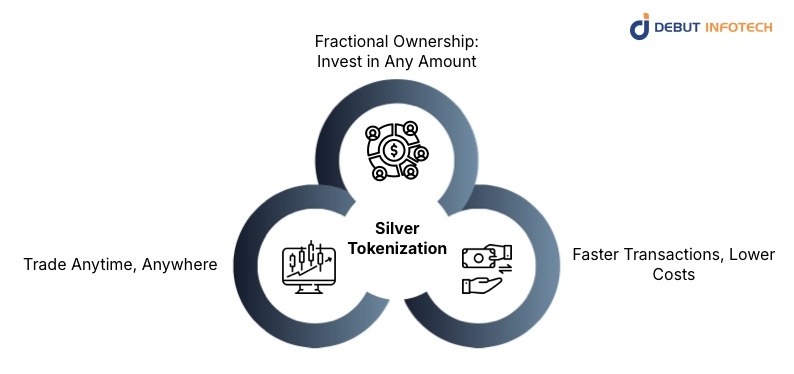
Investing in silver used to mean dealing with heavy bars, storage worries, and hunting for buyers when you wanted to sell. That process could be slow, costly, and honestly, a bit intimidating. Silver tokenization changes all that, making it faster, simpler, and much more accessible, especially for anyone exploring a digital silver investment.
Fractional Ownership: Invest in Any Amount
One of the biggest game-changers is fractional ownership. Instead of being limited to buying a whole coin or bar, tokenized silver lets you own just a tiny fraction of a larger silver bar. Thousands or even millions of digital tokens can represent a single physical asset. This means you can start investing with much smaller amounts, opening the market to more people and creating a deeper pool of buyers and sellers. More participants = more liquidity, which is exactly what investors need to move in and out of positions smoothly.
Trade Anytime, Anywhere
Another huge advantage is 24/7 trading. Traditional markets have strict hours, banks close on weekends, stock exchanges have set schedules but tokenized silver doesn’t play by those rules. Thanks to blockchain technology, you will be able to purchase or sell your silver tokens at any time that suits you, be it late at night, on a holiday, or global market ups and downs. This 24/7 connectivity keeps the market going and offers the convenience of easily locating someone to sell or buy with at any time of the day.
Faster Transactions, Lower Costs
Tokenized silver also removes a lot of the middlemen. Smart contracts automate trading, so you don’t have to deal with brokers, paper forms, or long approval times. Trades can settle almost instantly once conditions are met. That not only cuts down transaction costs, but it also makes the whole experience smoother and more efficient, a big win for investors looking for a hassle-free digital silver investment.
Step-by-Step Process: How Silver Gets Tokenized
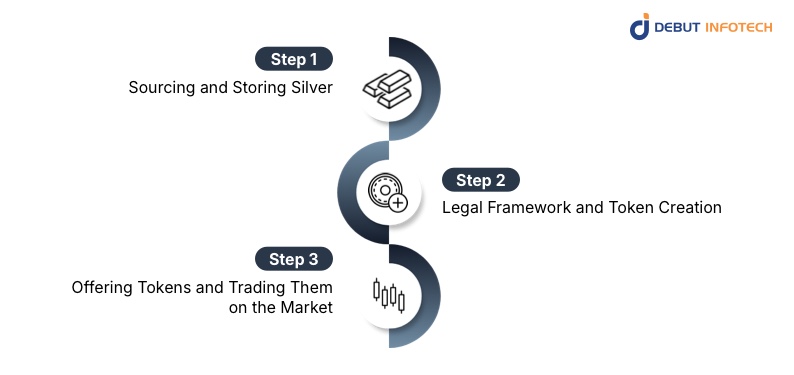
Turning physical silver into digital tokens might sound like a futuristic idea but it’s actually becoming more straightforward than you might think! While it does involve some high-tech processes, the core idea is simple: bringing the best of the old-school (silver) into the new digital world. Let’s break down how silver tokenization happens, step by step.
1. Sourcing and Storing Silver
The first step in tokenizing silver is securing the real metal. We are talking about high-quality, high-grade silver, often LBMA-certified (that is, it is recognized as the industry standard for precious metals). After sourcing the silver, it is then stored safely in secure insured vaults in the hands of reputable custodians. These are vaults such as the bank vaults of the silver world. The custodians keep track of every ounce, making sure it’s all accounted for. This is where the link between the physical silver and its digital token really starts to form.
2. Legal Framework and Token Creation
Next, legal experts and blockchain developers step in. For silver to be tokenized properly, a solid legal structure is put in place. This system guarantees that every token is equal to some actual silver and ensures the rights of the investors. After the paperwork has been sorted, then it is time to mint the tokens on the blockchain. This is where the magic works through smart contracts, or more simply called self executing agreements. All things done by smart contracts are automated, starting with the issuance of the tokens and handling ownership and even redemptions. It is the blueprint to your silver tokens, which are entirely done online.
3. Offering Tokens and Trading Them on the Market
Now that the legal preparations have been made and the tokens minted, it is time to put them into circulation. These tokens can be initially purchased by an offering, which is usually executed as a Security Token Offering(STO). After that, the fun really begins! These tokens may be traded in tokenization platforms or special exchanges where investors can easily buy, sell and trade them. This makes the market available 24/7 i.e. silver trading can occur any time, without the restrictions of the traditional trading time. The ease of trading and ability to buy fractions of silver makes it more accessible than ever before.
Real-World Case Studies: How Silver Tokens Work
Talking about silver tokenization is one thing, seeing it in action makes it real. Let’s look at a few examples that show how silver is being transformed into digital assets today.
Tokenized Silver (tXAG) Case Study
One of the simplest and clearest examples is the tSILVER (tXAG) token. Imagine it as a digital IOU for physical silver. Each tXAG token represents one gram of pure silver, safely stored in insured and regularly audited vaults. The cool part? You can actually swap your tXAG tokens for the real silver if you want, though most investors keep them digital. This direct 1:1 link between the token and the physical metal is what gives silver tokens their real-world value. It’s a straightforward concept, but it’s a perfect starting point for understanding how silver can exist digitally.
Insights from Gold and Other Tokenized Assets
Silver tokens didn’t emerge in isolation, they’re building on lessons from tokenized gold projects like Paxos Gold (PAXG). These earlier ventures showed there’s a real appetite for blockchain-backed precious metals and offered insights on what works best. By studying these examples, silver token projects can avoid common pitfalls, improve ownership tracking, and integrate more seamlessly with digital finance tools. Think of it as a roadmap: learn from what worked, tweak what didn’t, and make silver tokens even more accessible and trustworthy.
The Future of Silver Tokenization
Silver tokenization is a young field, but it is gaining traction at a rapid pace, not only in the crypto community. Large financial institutions are beginning to take notice, and this is a good indicator that tokenized silver is gaining real trust and credibility.
Market Growth and Institutional Interest
The most exciting fact is that large financial institutions are investigating this space. The benefits of silver tokenization, such as the ability to have a fractional ownership, and trading it faster, are seen by them as a means of making investments in precious metals more accessible and liquid. The institutional interest such as this injects additional money and stability, as well as choice into the market, assisting tokenized silver in its transition to mainstream.
Advancements in Platform Development
Technology is not left behind either. Silver is not the only commodity on which platforms are being constructed, but a more comprehensive variety of precious metals such as gold, platinum, and even such commodities as diamonds or copper. This implies that investors will be able to diversify easily. Beyond that, those platforms are becoming connected to other elements of the digital finance ecosystem, including lending and interest-generating opportunities, and the overall experience is becoming increasingly seamless and integrated.
Redefining How Precious Metals Are Traded
The game is being transformed by tokenization. Rather than carrying around bars of heavy metal or five-page contracts, investors can now carry a digital token, which is equal to actual silver. This ensures that trading is quicker, cheaper and accessible 24/7 in contrast to traditional markets.
Here’s what’s happening at a glance:
- More Choices, More Assets: Platforms are offering more than silver and provide investors with a larger variety of commodities to diversify their portfolio.
- Smart Tech: The increased security level, the automation of the proof-of-reserve mechanisms, and the smooth integrations of the systems facilitate the management of tokenized assets better than ever.
- Expanding Accessibility: Tokenization enables trading between different countries, which enables access to new markets by common investors.
The future remains unpredictable and yet the trend is evident: tokenized silver will turn into a significant component of individual precious metals investments. With advancements in technology and the increasing adoption rate, the advantages of tokenized silver in terms of liquidity, accessibility and flexibility will be even more evident in the future, defining the future of digital commodity investment.
Launch Your Compliant Silver Tokenization Project
Partner with Debut Infotech to build a secure, regulated digital asset platform tailored to your market. From design to deployment, we guide you.
Final Thoughts
Silver tokenization has made the acquisition of silver and the trade of silver accessible as never before. Having more solid custody, a smoother liquidity market, and add-ons such as 24/7 trading and fractional ownership, the experience is finally coming to par with the expectations of modern investors. There’s still work to do around regulation and liquidity, but the progress so far is promising.
Leading RWA tokenization companies like Debut Infotech are pushing this shift forward by building secure, scalable platforms that make tokenized real-world assets easy to launch and manage.
If you’re ready to explore the future of Silver Tokenization, now is the perfect time to get started and Debut Infotech can help you make it happen.
Frequently Asked Questions (FAQs)
Tokenized silver is actual real-life physical silver which is stored in secure vaults and is converted into a single digital token listed on a blockchain. Each token corresponds to a certain, redeemable volume of silver.
It makes silver easier to buy, sell, and trade, even in small fractions, with lower costs and 24/7 global access.
Kinesis Silver (KAG) is one of the most famous silver-backed crypto tokens. Every KAG token corresponds to one ounce of investment grade silver kept in audited and insured depositories.
Other options include tSILVER (TXAG) and Silvertoken (SLVT).
These tokens work in a similar way, giving investors a simple way to access tokenized silver and track the metal’s real-world price.
Yes, a considerable number of investors view silver as a sound investment going into 2026. It is used as a buffer in times of inflation and economic insecurity and as a necessary metal in a rapidly expanding industry such as EVs and solar energy. The long-term perspective is encouraging with the demand increasing at a higher rate than supply. Silver is volatile, however, so one would be smart in approaching it with a bit of caution. Nevertheless, numerous people consider price drops as an excellent opportunity to enter.


